
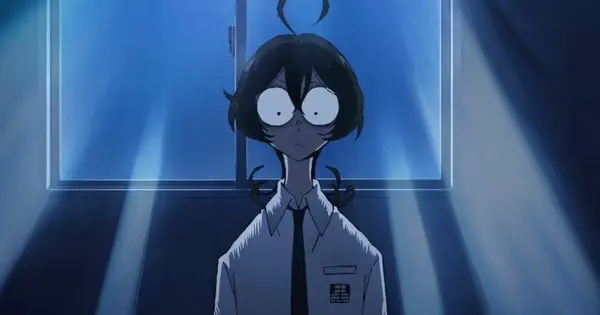
The anime adaptation of Paru Itagaki’s critically acclaimed manga, “SANDA,” has captivated audiences with its unique premise set in a near-future Japan where the spirit of Christmas has waned and children are exceptionally protected. As the series progresses, its ninth episode, titled “The roots of artificial flowers have rotted” or “It’s an Artificial Flower, But the Roots Rot,” marks a pivotal moment, plunging protagonist Kazushige Sanda into an intense internal battle over his identity and the true meaning of his powers as Santa Claus.
Sanda’s Identity Crisis and the Black Santa
Episode 9 brings Sanda face-to-face with his hardest challenge yet: self-doubt, rather than external enemies. His conviction is profoundly shaken after a confrontation with Chairwoman Tetsudome Toyo, who brutally states that Sanda lacks the necessary resolve to truly confront children. This accusation cuts deeper than any physical attack, leading Sanda to question whether the power he possesses as Santa is truly aligned with the “strong adult” he aspires to be.
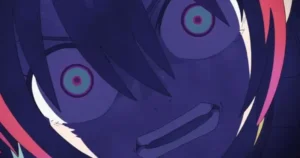
With Tetsudome’s backing, Sanda manifests a new, morally ambiguous persona known as “Black Santa.” This form, suggested to be an equivalent to Krampus, allows him to supposedly act without holding back against children and older individuals. However, Sanda grapples with the implications of this power, debating whether to embrace a combative role or to uphold his core principle of enduring violence without retaliating against children. His internal struggle becomes central, exploring the themes of purpose and power, and what it genuinely means to protect children while adhering to one’s beliefs.
Namatame’s Tragic Past Unveiled
A significant portion of Episode 9 delves into the harrowing backstory of Namatame. Viewers are given a glimpse into her past, revealing that her mother was consumed by an obsession with youth and beauty, a societal affliction prevalent in their future Japan. This obsession drove Namatame’s mother to extreme lengths, even self-amputation, when her hands could no longer be “fixed” by plastic surgery. Unable to bear her mother’s suffering, Namatame took drastic action, ultimately murdering her.
This revelation provides crucial insight into Namatame’s motivations, particularly her desire to put “hopeless adults” out of their misery and her plans to destroy the “Peak Youth ceremony” — an event celebrating the passage into adulthood at age 15, perceived as the peak of youth in their culture. Sanda’s subsequent encounter with Namatame solidifies his resolve not to become the combative “Black Santa.” Instead, he decides to “bear it,” intending to absorb all of Namatame’s aggression without fighting back.
Evolving Relationships: Fuyumura, Ono, and Amaya
Beyond Sanda’s personal journey and Namatame’s backstory, Episode 9 also highlights the complex relationships among the other characters. The bond between Shiori Fuyumura and Ichie Ono takes center stage, marked by both strain and intimacy. Ono’s sudden maturation due to puberty creates friction, leaving Fuyumura feeling her friend slipping away. A particularly intense scene depicts them undressing to confirm their feelings, highlighting the unusual societal views on maturity and childhood in their world. Fuyumura’s subsequent anguish leads her to implore Sanda to bring back the “child Ono” she knew.
Meanwhile, Sanda’s loyal friend, Amaya, is reluctantly burdened with a traumatic training regimen, where he is asked to repeatedly shoot Sanda’s Santa alter-ego to toughen him. This intense training aims to prepare Sanda to endure incoming attacks without retaliation, further emphasizing his unwavering commitment to his principles despite the severe mental cost to Amaya.
Animation Quality and Future Conflicts
Science SARU’s animation quality continues to be a highlight, with impressive visuals and fight sequences contributing to the episode’s impact. The episode aired on November 29, 2025, and maintains the series’ standard 24-minute runtime, available on Amazon Prime Video for international subscribers.
“SANDA – Episode 9” serves as a crucial turning point, setting the stage for future conflicts as the series approaches its climax. With Sanda’s values tested and his methods for protecting children without violence remaining unclear, the unresolved tensions promise an intense continuation of the narrative, particularly with the looming “Peak Youth ceremony” and the confrontation between Oshibu and Ono.