






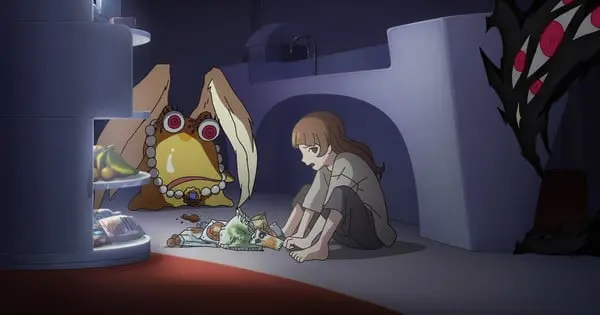
“DIGIMON BEATBREAK” delivered a compelling and unsettling narrative with its ninth episode, titled “Utopia,” which aired on November 29, 2025. The episode plunged viewers into a chilling exploration of forced happiness and societal control, marking a significant and potentially disturbing turn for the series. It premiered on Crunchyroll and Hulu for international audiences, among other regional streaming services.
A City Transformed into a Pastel Prison
Episode 9 opens with an unsettling transformation: an entire city district is inexplicably turned into a pastel-colored wonderland, ominously dubbed “Utopia”. In this new reality, every citizen wears a serene, seemingly forced smile, and their AI support devices, Sapotama, are locked at 100% bliss. The streets are adorned with candy-colored holograms, creating an illusion of perfect harmony where negative emotions are deemed illegal. This drastic change is orchestrated by a towering, angelic Digimon named Utopiamon, who enforces this “perfect bliss” through a citywide “happiness pulse” that forcibly rewrites negative emotions into dopamine loops.
Glowing Dawn Confronts Manufactured Joy
The central conflict of “Utopia” arises as the bounty hunting team “Glowing Dawn,” including protagonists Tomoro Tenma and Makoto Kuonji, infiltrates this fabricated paradise. They are quickly confronted with the insidious effects of Utopiamon’s power, as even members of their own squad begin to succumb to the overwhelming, artificial happiness. The episode highlights disturbing scenes where characters laugh maniacally at their own past traumas, or exhibit blank, contented smiles while engaging in nonsensical activities.
A particularly poignant moment involves Riko, who, under Utopiamon’s influence, tells Tomoro that she no longer needs him, preferring to be “happy alone”. This forces Tomoro to physically carry her out, battling against her desire to return to the false paradise.
Makoto’s Past and the Nature of Digimon
The episode also delves deeper into the backstory of Makoto, revealing his connection to the elite society within “Shangri-La,” a highly ordered and seemingly perfect environment. It is disclosed that Makoto was expelled from this utopian egg-like society because his father committed fraud, and also because Makoto refused to allow the deletion of his partner Digimon, Chiropmon, whom he considered a friend. This backstory adds layers to Makoto’s character, underscoring the series’ theme that Digimon often reflect the hearts of their human partners, and challenging the notion of a truly “perfect” society that suppresses individuality and emotion.
The episode features Makoto infiltrating Shangri-La with Reina and Tomoro, where they discover more about the world’s inner workings. They encounter Haruko and her partner Shademon, who are causing trouble in Shangri-La and ambushing the team to capture Goldnumemon.
Gekkomon’s Evolution and a Cry for Authenticity
A pivotal moment arrives with the introduction of Gekkoanarchmon, Gekkomon’s rage-fueled Digivolution. This punk-rock dragon-frog Digimon, adorned with chains and spray-paint, serves as a powerful symbol of rebellion against Utopiamon’s forced positivity. Gekkoanarchmon’s roar literally shatters the happiness halos, allowing the citizens to break free from the mind-numbing bliss and experience genuine emotions once more. Its defiant cry, “IT’S OKAY TO BE SAD!”, resonates as a manifesto against the “good vibes only” culture enforced by Utopiamon.
The climax sees Utopiamon attempt to trap Tomoro in an alternate reality where his life is perfect, free from past tragedies. However, Tomoro rejects this false paradise, choosing the messy reality and his scars over a life of forgotten pain, leading to Utopia’s collapse and the return of raw, unfiltered emotions to the city.
Foreshadowing Future Conflicts and Character Development
“Utopia” has been hailed by some viewers as one of the most disturbing and impactful episodes of the “Digimon” franchise, prompting discussions about mental health and the dangers of suppressing genuine feelings. The episode sets the stage for further exploration of “e-Pulse” as an energy source, the nature of Digimon, and the ongoing conflict between humans and these digital lifeforms. The potential evolution of Chiropmon and the deepening bond between Makoto and his partner are also hinted at, promising significant character development in upcoming episodes. With its darker tone and ambitious storytelling, “DIGIMON BEATBREAK” continues to carve out a unique space within the franchise, captivating audiences with its complex themes and compelling characters.