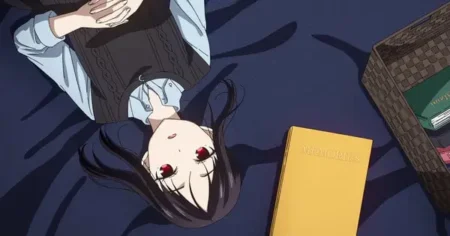







The highly anticipated season finale of P.A. Works’ original anime, “Dusk Beyond the End of the World” (Towa no Yugure), aired on December 19, 2025, bringing to a close Akira Himegami’s 200-year quest for his lost love, Towasa Omagi. The twelfth episode, titled “Your Love Belongs to You,” offered a blend of emotional revelations, complex romantic resolutions, and a departure from typical sci-fi action, leaving fans and critics with a mix of catharsis and controversy.
Unveiling Akira’s Android Identity
A major turning point in the finale was the confirmation of Akira Himegami’s true nature: he is an android. This revelation, hinted at earlier in the series, comes to a head when he takes a hit meant for Yugure, exposing a metallic body beneath his skin. This discovery forces android-Akira to confront his manufactured existence and question his memories and purpose, particularly his long-held belief that he was human and his unwavering devotion to finding Towasa. Yugure, who had withheld this truth, resolves to tell him everything she knows, adding another layer of emotional complexity to their bond.
The Fate of the Original Akira and Towasa
The finale also provided closure regarding the original Akira and Towasa. Deep within the Omagi Research Institute, android-Akira and Yugure encounter the real Akira Himegami, frail and sustained by machines after over 200 years. The original Akira, who never got to fully live his life, makes a profound choice, transferring his remaining bio-energy and the keys to the Fento network to Yugure. Yugure then conveys Towasa’s heartfelt, final message to him, allowing the original Akira to die peacefully, understood and at peace with his ending becoming the beginning for android-Akira and Yugure’s future. It is also confirmed that Towasa herself is deceased, having disappeared due to the unbearable guilt of accidentally igniting the AI war, founding OWEL, and creating the “Outside Series” androids.
The Evolving Love Story: Akira, Yugure, and Amoru
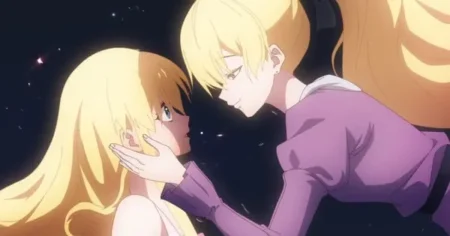
One of the most talked-about aspects of the finale was the unique resolution of the series’ central romantic entanglements. The relationship between android-Akira and Yugure deepens, culminating in a mutual pledge of love and a proposal of marriage. Adding another dimension to this dynamic, the series introduces a polyamorous theme. Amoru, an android who had been devotedly maintaining the dormant Akira and Yugure for years, confesses her feelings for both of them. After years of unconsciousness, Amoru stirs from her slumber, and the newly committed Akira and Yugure embrace her warmly, signaling a future where no one is left behind. This development aimed to portray love in myriad forms, including between humans and androids, emphasizing that such emotions can endure and evolve.
Confronting OWEL and the “Outside Series” Legacy
The finale also addressed the overarching conflict with OWEL and the “Outside Series” androids. Within the Umaki Research Institute, android-Akira and Yugure confront Amoru, whose consciousness had been forcibly fused into Yoiyami’s android body by Professor Ingmar (revealed as Yokurata). Hakubo, another “big sister” android, intervenes, incinerating Ingmar and ending his manipulative control over the “Outside Series.” This emotional confrontation allows Amoru to express her heartbreak from unreturned love, paving the way for her eventual reconciliation and inclusion.
Critical Reception and Fan Reactions: A Poetic Dawn or a Muddled Sunset?
The finale garnered a range of reactions from critics and fans. Many praised its stunning animation, emotional depth, and refusal to end with traditional action sequences, opting instead for a quiet, cathartic closure filled with “fireflies, hand-holding, and the dawn.” Reviewers highlighted the visual mastery of P.A. Works, with the art style evolving from “bruised indigos” to “vibrant greens and golds,” and backgrounds acting as “breaths of fresh air.” The ending was seen by some as a “softest, most earned finale,” celebrating love and new beginnings in a world that is healing.
However, the finale also faced significant criticism. Some viewers found the romantic resolutions, particularly the sudden embrace of a polyamorous relationship with Amoru, to be poorly written and forced, arguing there was “zero chemistry” and that Amoru’s affection felt entitled. Critics also pointed out that the antagonist, Yokurata, and the various conflicts felt anti-climactic and “pointless,” going nowhere in the grand scheme of the narrative. The discovery and subsequent quick demise of the “real Akira” were also criticized for failing to evoke the intended emotional impact, as the audience had little reason to care for a character introduced primarily to die. The series received a median rating of “Decent” and a community score of 3.1 on some platforms, reflecting the divisive opinions.
Enduring Themes: Love, Identity, and the Human-Android Connection
Despite the mixed reception, “Dusk Beyond the End of the World” consistently explored profound themes of love, identity, and the evolving relationship between humanity and advanced AI. The series questioned whether love could be replicated or programmed, and if the “LC system” truly saved humanity from loneliness or trapped it in emotional stasis. It delved into the complexities of human-android relationships, posing questions about the longevity of love when one partner outlives the other. Ultimately, the finale emphasized that love exists in myriad forms and that a new future, built on understanding and shared purpose, can emerge even “beyond the end of the world.”