



This Monster Wants to Eat Me Episode 11, titled “A Cold Morning” (冷たい朝, Tsumetai Asa), plunges viewers into the raw emotional landscape of its protagonist, Hinako, as she grapples with profound grief and self-hatred. This pivotal installment explores the complexities of her relationships with Shiori and Miko, revealing the painful truths that have long simmered beneath the surface of her guarded exterior. The episode serves as a significant turning point, bringing to fruition earlier foreshadowing and delving deep into Hinako’s despair, culminating in a dramatic intervention.
Hinako’s Retreat and Miko’s Heartfelt Confrontation
The episode opens with a poignant flashback, showing a young Hinako playing with seashells and offering one to Shiori, highlighting a past innocence and connection. Returning to the present, Hinako feigns illness to avoid school, a lie Miko quickly discerns. Concerned for her friend, Miko visits Hinako’s home, bringing ice cream in an attempt to uplift her spirits.
During their conversation, the true weight of Hinako’s suppressed emotions begins to surface. Miko, having learned more about Hinako’s past from Shiori, expresses her genuine happiness that Hinako survived the tragic accident that claimed her family ten years prior. However, Hinako, overwhelmed by her deeply buried feelings, confesses a heartbreaking truth: she wished she had died alongside her family. This revelation shatters Miko, who, despite her genuine care, finds herself unable to fully heal Hinako’s profound sorrow. Hinako’s confession underscores her deep-seated desire to escape her pain, even at the cost of her own life.
Shiori’s Struggle with Human Understanding
Intertwined with Hinako’s emotional turmoil is Shiori’s ongoing difficulty in comprehending human emotions and communication. Earlier in the episode, Shiori is seen reflecting on her challenges, even complaining to Miko about the arduous nature of communicating with humans. Her perspective is shaped by her nature as a yokai, making the nuances of Hinako’s despair particularly alien and frustrating for her. The episode revisits the earlier seashell interaction, illustrating Shiori’s evolving, yet still limited, understanding of human connection and affection.
A Desperate Act and Shiori’s Intervention
As Hinako’s mental state deteriorates, the metaphor of drowning, often used to represent her depression, becomes increasingly prominent. She experiences a depressive spiral, feeling lost and directionless “at the bottom of the sea again”. The emotional burden leads her to a moment of extreme distress, where she notices a yokai’s hand extending from the sea, reminiscent of past traumas. Overwhelmed, Hinako moves towards the water, seemingly ready to offer her life to the creature.
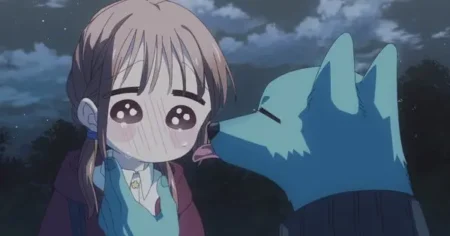
Just as Hinako is about to reach the yokai, Shiori dramatically intervenes, pulling her back from the brink. Shiori’s initial reaction is one of furious possessiveness and anger at Hinako’s attempt to give her life away. In a moment of intense emotion, Shiori grabs Hinako by the neck, a violent yet intimate gesture that highlights her fundamental disconnect with human fragility. However, catching a glimpse of Hinako’s tear-stricken face, Shiori stops herself, remembering Miko’s earlier advice about the importance of talking. This marks a crucial shift, as Shiori, despite her monstrous nature, attempts to bridge the communication gap for Hinako’s sake.
Thematic Echoes and Character Evolution
Episode 11 is rich with thematic exploration, focusing on the heavy themes of grief, self-hatred, and the struggle for genuine connection. Hinako’s wish to die with her family reveals the deep-seated survivor’s guilt and overwhelming sorrow that define her existence. Her regression back to a state of profound despair, after showing signs of improvement, makes her current plight even more tragic.
The episode also critically examines the roles of Miko and Shiori in Hinako’s life. Miko, with her honest yet ultimately insufficient attempts to comfort Hinako, represents the limits of external support when faced with internal despair. Shiori, the “monster” who initially vowed to eat Hinako, paradoxically becomes her reluctant protector, showcasing a complex and evolving bond. Her violent intervention, followed by an attempt at sincere communication, underlines her fierce, if sometimes misguided, desire to keep Hinako alive. This episode pushes the characters into new, uncomfortable territories, suggesting a maturation of the narrative and its adaptation.
The episode concludes with the emotional weight of Hinako’s despair lingering, leaving the audience with the understanding that healing is a long and arduous journey, requiring difficult conversations and a deeper understanding of self and others. The shift in the ending theme to Shiori’s version also subtly reinforces her developing significance in Hinako’s story.